
Tether Launches Self-Custodial Wallet for Direct Stablecoin and Bitcoin Payments

Tether Moves Direct-to-Consumer with Proprietary Wallet
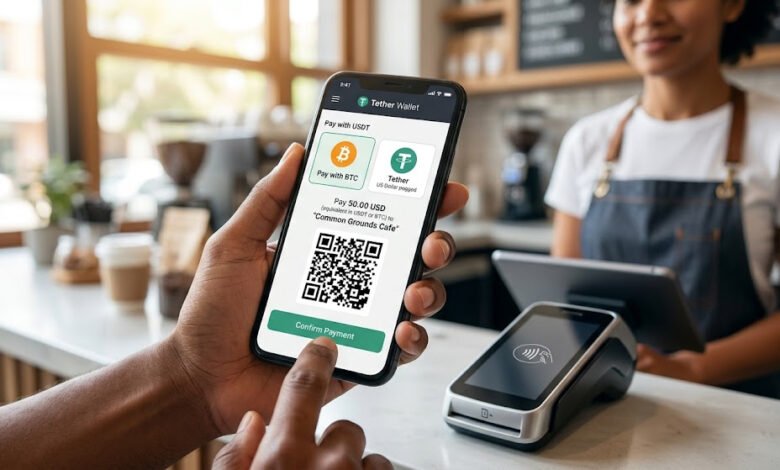
Tether, the issuer responsible for the crypto market’s largest stablecoin by circulating supply, launched a proprietary cryptocurrency wallet on April 14. The self-custodial product, dubbed tether.wallet, is designed to facilitate stablecoin, tokenized gold, and Bitcoin payments directly for retail users.
Historically, stablecoin issuers have operated strictly as infrastructure providers. They mint and burn tokens, relying on third-party cryptocurrency exchanges, decentralized applications, and independent wallet software to handle consumer distribution and payment routing.
Shifting Market Structure
The introduction of an in-house wallet alters this operational model. By offering a direct interface for transactions, Tether assumes control over the user experience at the point of sale.
This infrastructure positions the stablecoin issuer in direct competition with established wallet providers and merchant payment processors. It bypasses the traditional exchange interfaces that typically capture retail payment volume.
The strategy internalizes the payment channel. Users transacting in USDT, USAT, Tether Gold (XAUT), and Bitcoin can now execute transfers without routing funds through secondary commercial platforms, consolidating the transaction lifecycle under Tether’s proprietary ecosystem.
Technical Specifications and Fee Mechanics
The tether.wallet software implements several structural changes to standard cryptocurrency payment routing. It replaces alphanumeric wallet strings with human-readable identifiers, allowing users to format addresses similarly to standard email configurations.
The application also removes the requirement for secondary network gas tokens. Transaction execution fees are deducted directly from the primary asset being transferred.
The wallet supports multi-chain integration, operating across Ethereum, Polygon, Arbitrum, and the Bitcoin Lightning Network. All transaction signing occurs on-device, with private keys remaining strictly under the user’s local custody.
“Users should be able to send value as easily as sending a message, without relying on intermediaries and without giving up control of their assets,” Tether CEO Paolo Ardoino stated regarding the structural design.
Infrastructure Scaling
The consumer application is built upon Tether’s Wallet Development Kit (WDK). This open-source framework was previously deployed for the video platform Rumble’s non-custodial wallet integration earlier this year.
According to corporate disclosures from March, Tether’s underlying settlement technology is currently utilized by more than 570 million active wallets globally. The release of tether.wallet provides this existing user base with a native, first-party interface for direct asset management.
The content provided in this article is for informational and educational purposes only. It is not intended to be, and should not be construed as, financial, investment, legal, or tax advice.