Rakuten Enables XRP Payments for 44 Million Users via Loyalty Points Integration

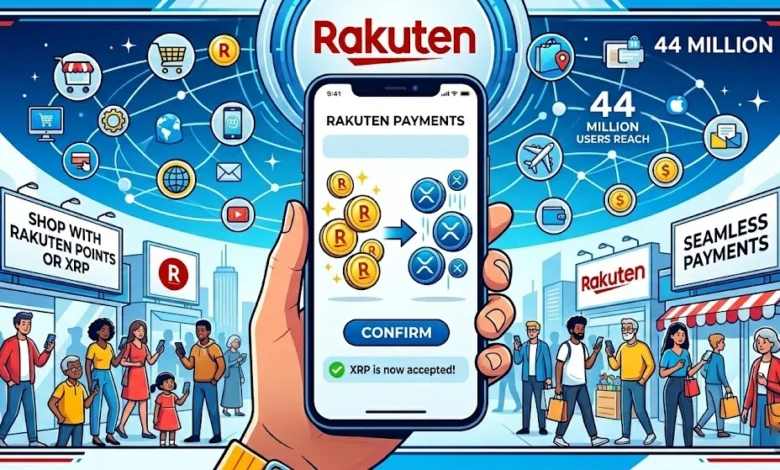
- Japanese e-commerce operator Rakuten is allowing users to convert loyalty points into XRP for use across 5 million affiliated merchants.
- Ripple representatives clarified the integration is an independent Rakuten Wallet initiative, not an official corporate partnership.
- Historical retail data suggests consumers are unlikely to convert stable rewards into volatile digital assets for routine purchases.
Rakuten, the Tokyo-based internet services and e-commerce conglomerate, is integrating XRP into its payment infrastructure. Following initial reports on April 14, 2026, subsequent market data confirms the company is enabling the cryptocurrency as an indirect payment method for its user base of 44 million customers. Operating under a license from Japan’s Financial Services Agency (FSA), Rakuten Wallet is rolling out the feature to bridge its native loyalty program with digital asset markets.
The specific mechanics of the integration allow users to purchase XRP using Rakuten Points. The token can then be loaded into the platform’s proprietary digital balance system, Rakuten Cash, and spent at over 5 million domestic merchants. The corporate ecosystem currently holds over 3 trillion unspent loyalty points, representing an estimated $23 billion in capital. While the addressable liquidity pool is large, enabling cryptocurrency payments at the enterprise level routinely generates more media traction than actual consumer utilization.
Historically, retail consumers resist using volatile digital assets for routine goods and services. Transferring XRP’s primary utility cross-border liquidity provision and speculative trading to domestic retail checkout carts requires overcoming the friction of capital gains tracking and price slippage. From a behavioral economics standpoint, it is highly uncommon for an average consumer to convert a stable, fiat-pegged loyalty point into a fluctuating asset only to immediately liquidate it back into fiat for daily expenses.
Furthermore, the backend settlement process ensures that participating merchants are not holding XRP on their balance sheets. The integration functions purely as a routing mechanism where the cryptocurrency is liquidated into Japanese Yen via Rakuten Pay at the point of sale. This architecture captures a marginal subset of crypto-native shoppers without exposing Rakuten or its vendor network to balance sheet volatility.
The broader market narrative has also been tempered by Ripple’s own executives. Following the initial retail response, Tatsuya Kohrogi, Ripple’s senior ecosystem growth manager, publicly clarified that the rollout is entirely a Rakuten Wallet initiative rather than a direct, co-managed Ripple service integration.
Ultimately, Rakuten is expanding the trading functionality of its existing wallet service to act as an alternative funding source for its payment app. The definitive metric of success will not be the 44 million potential users or the 5 million accessible merchants, but the sustained daily volume of XRP-denominated checkouts in the coming fiscal quarters.
The content provided in this article is for informational and educational purposes only. It is not intended to be, and should not be construed as, financial, investment, legal, or tax advice.