

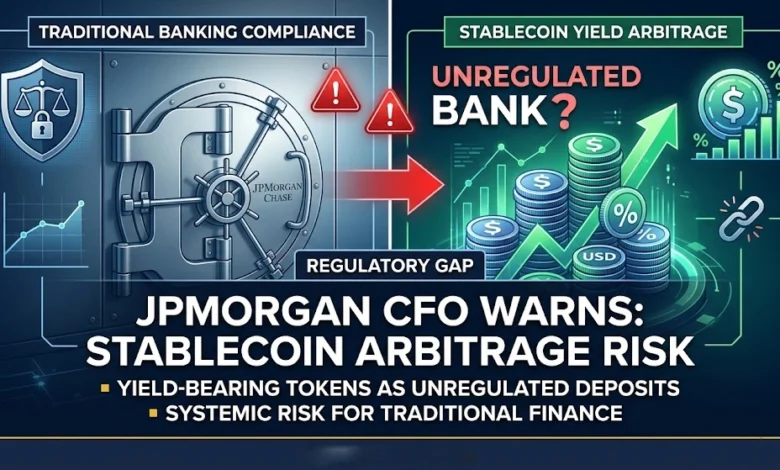
JPMorgan CFO Cautions Stablecoins Could Exploit Regulatory Gaps
JPMorgan Chase, the largest multinational investment bank in the United States, has formally outlined its concerns regarding the oversight of fiat-pegged digital assets. Speaking during the bank’s first-quarter earnings call this week, Chief Financial Officer Jeremy Barnum warned that stablecoins are at risk of becoming a “regulatory arbitrage play.”
Regulatory arbitrage occurs when financial entities capitalize on inconsistencies in oversight to bypass strict compliance measures. Barnum specifically targeted stablecoins that offer yield to users. He noted that these assets replicate traditional deposit products without adhering to standard capital, liquidity, and consumer protection requirements.
Without unified regulatory frameworks, digital asset operators could systematically bypass the compliance standards required of traditional financial institutions. “If the same product isn’t regulated the same way, you open the door to arbitrage,” Barnum stated during the call.
The Yield Debate and Proposed Legislation
The conflict highlights a structural division between traditional finance and digital asset issuers. Certain crypto firms, such as Coinbase, have advocated for the ability to pass the interest earned on fiat reserve assets back to token holders. They argue this structure makes stablecoins more functional as savings instruments.
Traditional banks oppose this model. Barnum noted that allowing these yield structures enables crypto firms to essentially “run a bank” while avoiding core banking regulations. The banking sector argues this lack of oversight creates a parallel banking system devoid of necessary prudential safeguards.
Lawmakers in Washington D.C. are currently negotiating new legal frameworks for digital assets. The drafted Digital Asset Market Clarity Act proposes prohibiting service providers from paying interest based solely on stablecoin balances. This legislation builds on the 2025 GENIUS Act, aiming to prevent stablecoins from functioning as unregulated deposit accounts.
Balancing Innovation with Compliance
JPMorgan executives emphasized that their position is based on oversight, not a rejection of blockchain infrastructure. The bank actively participates in the sector, operating its own tokenized money market funds and blockchain-based settlement systems like JPM Coin.
The primary focus remains on strict regulatory alignment. Barnum indicated that establishing a financial ecosystem with the features of banking, but lacking the consumer protections developed through historical bank regulation, presents a direct risk to financial stability.
The content provided in this article is for informational and educational purposes only. It is not intended to be, and should not be construed as, financial, investment, legal, or tax advice.