
The South Korean government, the central sovereign authority overseeing one of the most active digital asset markets in Asia, is advancing its blockchain integration efforts. State officials are preparing to test blockchain deposit tokens to manage and execute government spending.
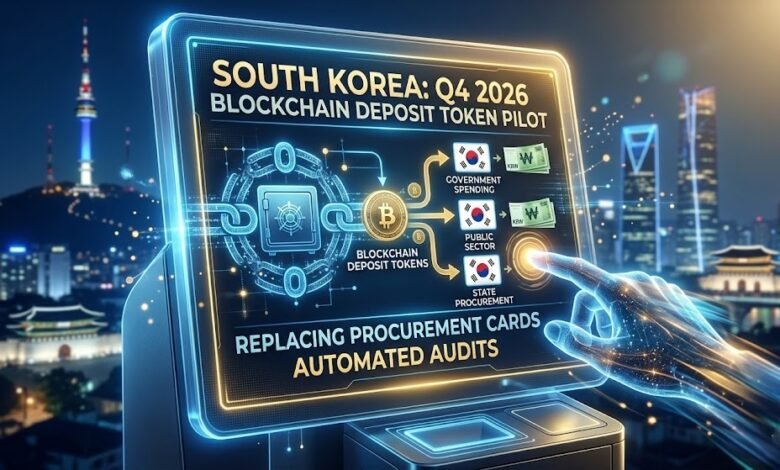
The Ministry of Economy and Finance confirmed the pilot program is slated for the fourth quarter of 2026. The initiative shifts focus from retail cryptocurrency trading to sovereign, enterprise-grade applications of distributed ledger technology.
Replacing Government Procurement Cards
Deposit tokens function as digital representations of fiat bank deposits recorded on a blockchain network. South Korea intends to evaluate how these specific tokens can be utilized for official state disbursements.
Approved under a 2026 regulatory sandbox program, the trial will take place in Sejong City. The pilot specifically targets business promotion and operating expenses, which are currently processed through standard government purchasing cards.
The regulatory sandbox permits state agencies to temporarily bypass the Treasury Funds Management Act. This legislation historically mandates credit or debit card usage for official departmental expenditures.
Programmability and Cost Reduction
Testing deposit tokens for public spending allows authorities to monitor programmable money within a controlled, state-backed environment. The tokens can be coded with strict parameters, enforcing specific timeframes for spending and restricting exactly which industries can accept the funds.
This programmable infrastructure is designed to automate financial oversight. Authorities anticipate the technology will significantly reduce the need for manual audits, particularly for transactions executed outside of standard working hours.
The system actively bypasses traditional payment intermediaries, such as commercial card networks. The Ministry noted this structural change is expected to lower transaction fees for the small businesses receiving government payments.
This Q4 initiative represents the government’s second deployment of deposit tokens for Treasury operations. It directly follows an earlier, specialized pilot program that used deposit tokens to distribute subsidies for electric vehicle charging infrastructure.
The content provided in this article is for informational and educational purposes only. It is not intended to be, and should not be construed as, financial, investment, legal, or tax advice.