
Pakistan Reverses 2018 Banking Ban on Virtual Asset Providers
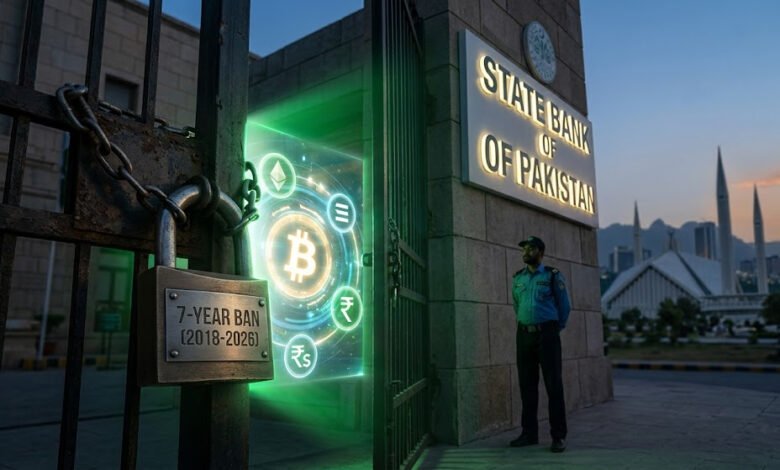
The State Bank of Pakistan (SBP), the nation’s central bank, has formally lifted a long-standing ban that prevented the country’s financial institutions from interacting with digital asset companies. Through BPRD Circular Letter No. 10 of 2026, the SBP now allows commercial banks to open and maintain accounts for virtual asset service providers.
The reversal ends an eight-year regulatory restriction in the jurisdiction, originally imposed in 2018. Prior to this update, banking institutions in Pakistan were entirely prohibited from servicing entities dealing in virtual assets.
Legislative Framework and PVARA Oversight
The policy adjustment directly follows the enactment of the Virtual Assets Act in March 2026. This legislation established the Pakistan Virtual Asset Regulatory Authority (PVARA) as the statutory body responsible for licensing and overseeing the digital asset sector.
Under the new SBP framework, banks are only permitted to onboard VASPs that have obtained a formal license from PVARA. Financial institutions are required to verify these government-issued licenses before initiating any banking relationship.
Operational Constraints and Compliance
While banks can now service crypto-related businesses, the central bank has imposed strict operational boundaries. Regulated financial entities are explicitly barred from using their own funds or customer deposits to invest in, trade, or hold virtual assets.
The SBP mandates that banks open segregated, non-interest-bearing accounts denominated in Pakistani rupees for licensed VASPs. The commingling of client funds with firm operational capital is strictly prohibited.
Furthermore, banks maintain full responsibility for anti-money laundering (AML) and counter-terrorism financing (CFT) compliance. Institutions are required to conduct enhanced due diligence, report suspicious activity, and continuously monitor VASP transactions to filter out illicit financial flows.
The content provided in this article is for informational and educational purposes only. It is not intended to be, and should not be construed as, financial, investment, legal, or tax advice.