
Binance Adjusts UAE Operations Amid Regional Conflict
Binance, the cryptocurrency exchange responsible for the largest share of global spot and derivatives trading volume, has initiated temporary relocation offers for its employees stationed in the United Arab Emirates. The policy was implemented in response to operational disruptions stemming from the ongoing conflict in the Middle East.
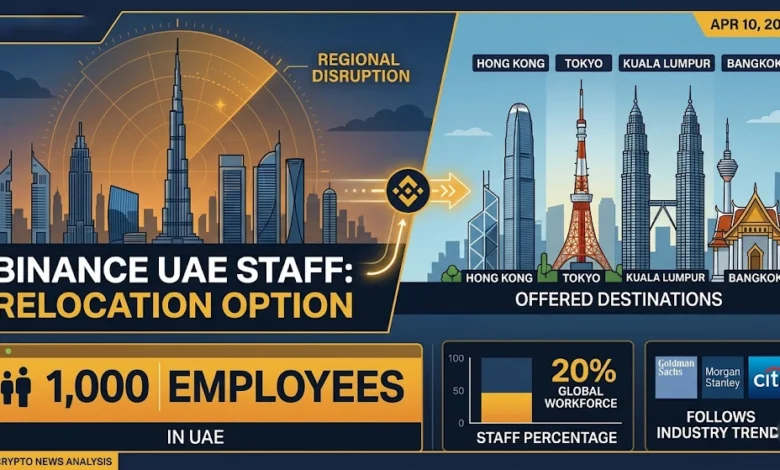
The exchange has offered its UAE staff the option to temporarily relocate to Hong Kong, Tokyo, Kuala Lumpur, and Bangkok. A Binance spokesperson stated the move is a “precautionary measure prioritizing employee welfare, to offer flexibility and support during uncertain times.”
Geopolitical Risk in Crypto Infrastructure
The relocation offer underscores the intersection between physical business operations and global cryptocurrency liquidity. The UAE serves as a critical regulatory and operational anchor for Binance under Abu Dhabi Global Market (ADGM) supervision. The exchange currently employs roughly 1,000 individuals in the region, representing approximately 20% of its global workforce.
Despite the relocation options, Binance representatives confirmed that many employees have chosen to remain in the UAE. The exchange’s regional operations remain normal. This operational adjustment follows earlier internal recommendations urging staff to prioritize remote work and limit outdoor activities during the peak of regional hostilities.
The strategy aligns with broader risk management trends across the financial sector. Traditional banking institutions operating in the Gulf, including Goldman Sachs, Morgan Stanley, and Citigroup, have recently authorized similar remote work and temporary relocation protocols for their regional staff. Market analysts continue to monitor how major exchanges manage workforce continuity, as centralized infrastructure requires consistent human oversight for compliance, security, and institutional client management.
The content provided in this article is for informational and educational purposes only. It is not intended to be, and should not be construed as, financial, investment, legal, or tax advice.