

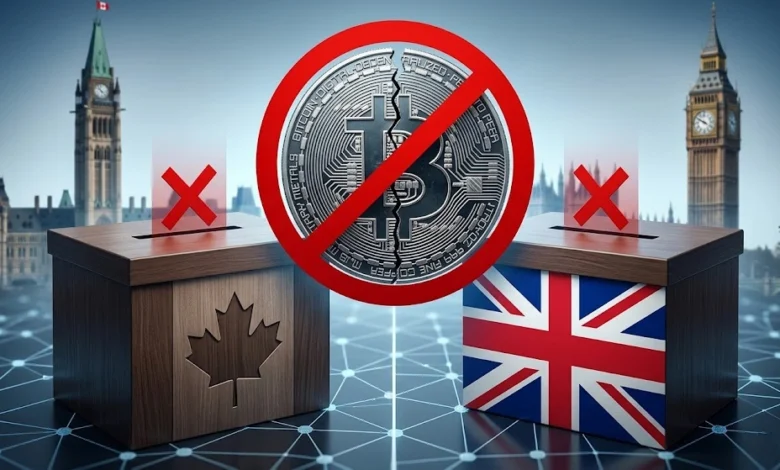
- Canada introduced Bill C-25 to prohibit cryptocurrency, prepaid card, and money order donations for federal election campaigns.
- The Canadian legislation mandates a 30-day window to return or remit illicit digital asset funds, with corporate fines reaching $100,000.
- The UK implemented an emergency moratorium on crypto political donations on March 25, 2026, following an independent review on foreign interference.
Canada Moves to Restrict Crypto Campaign Donations, Following UK Precedent
Canadian regulators are advancing measures to ban cryptocurrency donations for political election campaigns. The proposed restriction, outlined in legislation introduced on March 26, 2026, aligns Canadian electoral finance policy with recent precedents set by lawmakers in the United Kingdom.
Elections Canada and allied regulatory bodies are actively tightening the frameworks governing how political entities accept and report funding. Digital assets, characterized by decentralized networks and varying degrees of pseudonymity, present distinct challenges for standard campaign finance auditing.
The legislative push reflects a growing consensus among international electoral commissions. By restricting digital asset contributions, Canadian authorities are aiming to standardize campaign finance protocols around traditional fiat systems, which offer established mechanisms for identity verification and source tracking.
Bill C-25: The Strong and Free Elections Act
The Canadian measure, formally known as the Strong and Free Elections Act (Bill C-25), targets funding channels that regulators classify as difficult to trace. It explicitly prohibits political parties, candidates, and third-party advertisers from accepting donations in cryptocurrencies, money orders, and prepaid cards.
Government House Leader Steven MacKinnon introduced the bill to the House of Commons, citing the necessity of blocking foreign interference in the electoral process. Bill C-25 revives and expands upon similar prohibitions initially drafted in 2024 under the failed Bill C-65, now adding stricter enforcement timelines and compliance mandates.
Under the proposed framework, campaigns that receive digital asset contributions in violation of the rules have 30 days to return, destroy, or convert the funds. Any recovered fiat value must be remitted directly to the Receiver General. The legislation also increases maximum administrative monetary penalties to $25,000 for individuals and $100,000 for organizations.
International Policy Alignment: The UK Precedent
The development in Canada directly follows an emergency moratorium on cryptocurrency donations enacted by the United Kingdom on March 25. UK Prime Minister Keir Starmer announced the immediate ban alongside a £100,000 annual cap on donations from overseas electors.
The UK’s policy shift stems from the findings of the Rycroft Review, an independent investigation into foreign financial interference in British electoral systems. The review concluded that digital assets present an unacceptable risk of funneling untraceable capital from hostile foreign states into domestic elections.
The UK moratorium immediately impacts Reform UK, currently the only major Westminster party to actively solicit and accept political donations in Bitcoin. UK regulators stated the temporary ban will remain in place until the Electoral Commission establishes a comprehensive statutory framework for digital asset disclosures.
Impact on Political Action Committees
For political action committees and individual campaigns operating within Canada, the impending ban eliminates an alternative funding channel. Campaigns that previously established public cryptocurrency wallets or partnered with third-party payment processors to convert crypto donations to fiat will need to dismantle those infrastructures.
The focus now shifts to the parliamentary progression of Bill C-25. Regulators will need to issue precise guidance on how campaigns must audit their existing digital ledgers and handle unsolicited, automated token transfers sent to previously publicized wallet addresses.
The content provided in this article is for informational and educational purposes only. It is not intended to be, and should not be construed as, financial, investment, legal, or tax advice.