
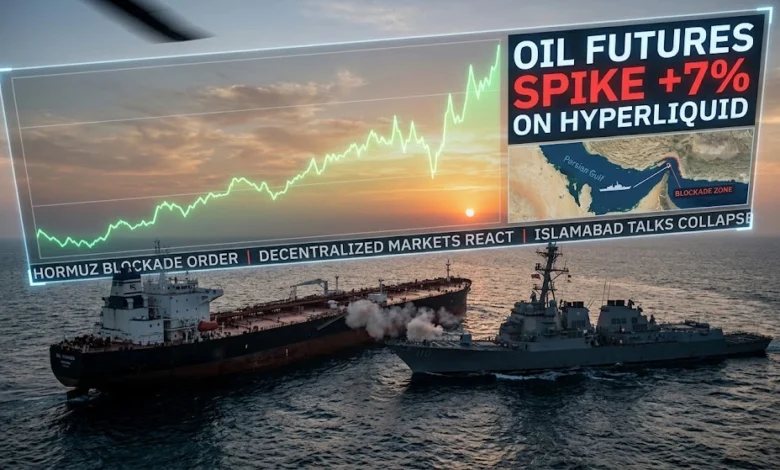
Oil futures trading on Hyperliquid, a decentralized perpetual derivatives exchange, rose 7% on April 12, 2026. The sudden price increase occurred immediately following orders from Donald Trump to establish a naval blockade at the Strait of Hormuz.
The Strait of Hormuz is a primary maritime chokepoint for global energy distribution. By restricting access to this route, the blockade order immediately altered supply expectations across global energy markets. Traders on the decentralized platform reacted strictly to the anticipated physical supply deficit.
Macro-Economic Impact
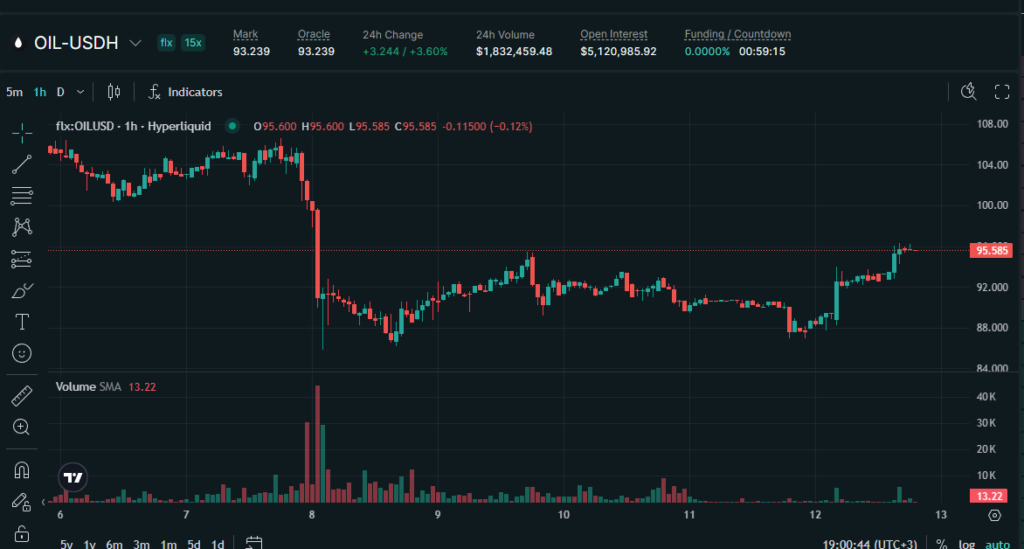
The 7% upward movement in oil futures reflects immediate institutional and retail hedging against supply chain failure. Hyperliquid’s order books demonstrated heavy long positioning as the geopolitical directive became public.
Traders utilize platforms like Hyperliquid to execute 24/7 geopolitical trades outside of traditional market hours. The rapid repricing of the asset indicates that on-chain liquidity providers and market makers are aggressively adjusting risk models to account for the naval intervention.
Market Positioning
Historically, military action near major energy corridors results in sustained volatility for related commodities. The current pricing structure on the decentralized exchange suggests that participants expect the blockade to materialize and hold, rather than viewing the announcement as a temporary diplomatic maneuver.
Further price discovery on Hyperliquid will depend on the physical deployment of naval assets and any subsequent retaliatory actions in the region.
Broader Market Contagion
The macroeconomic shock of the blockade extended rapidly beyond energy derivatives. Synthetic S&P 500 futures trading on Hyperliquid initiated a sharp downward trajectory, while Bitcoin fell 3.6% to trade below $72,000. This immediate divergence surging oil futures alongside dropping equities and crypto assets signals a severe transition to risk-off positioning among market participants.
Breakdown of Islamabad Negotiations
The blockade directive, announced via a post on Truth Social, acts as a direct response to a breakdown in diplomatic negotiations in Islamabad, Pakistan. U.S. Vice President JD Vance departed the 21-hour summit over the weekend without securing an agreement regarding Iran’s nuclear development capabilities and the reopening of the Strait.
“The bad news is that we have not reached an agreement – and I think that’s bad news for Iran much more than it’s bad news for the United States of America,” Vance stated during an early Sunday press conference. The failure of these talks leaves traders pricing in a prolonged physical supply disruption rather than a temporary diplomatic standoff.
Institutional analysts are already adjusting long-term supply models to account for the geopolitical impasse. Ole Hansen, head of commodity strategy at Saxo Bank, warned that the lack of progress “risks pushing the global market closer to a full-blown energy crisis,” noting that U.S. policy options in the region remain highly constrained.
The content provided in this article is for informational and educational purposes only. It is not intended to be, and should not be construed as, financial, investment, legal, or tax advice.