
Iran Imposes Digital Asset Transit Fees for Strait of Hormuz Shipping
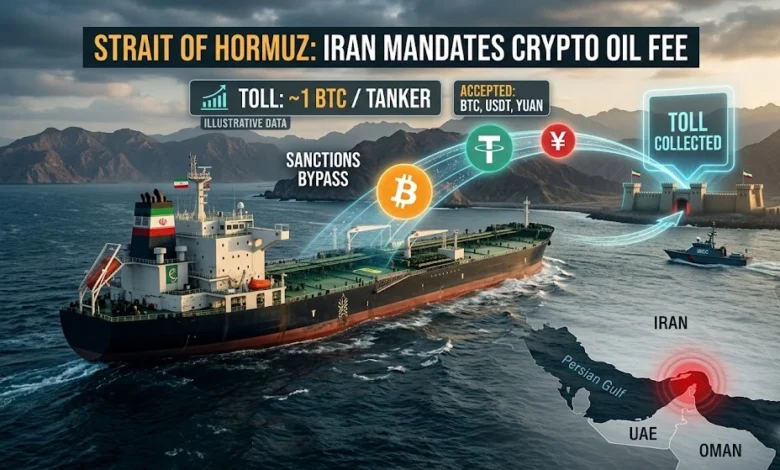
Iran is executing a cryptocurrency and yuan-based toll system for oil tanker traffic transiting the Strait of Hormuz. Iran, a sovereign state operating under comprehensive international financial sanctions, controls the northern coastline of this maritime passage. Recent reports indicate the transit fee is set at approximately $1 per barrel of oil.
The Strait of Hormuz connects the Persian Gulf to the Gulf of Oman. It is a mandatory routing for roughly 20% of global daily oil consumption. Imposing a digital asset payment requirement forces international shipping companies to directly engage with alternative settlement networks outside of U.S. dollar dominance.
Operational Mechanics and IRGC Oversight
The toll system is administered by an intermediary linked to the Islamic Revolutionary Guard Corps (IRGC). Ship operators must submit ownership records, cargo manifests, and destination data for geopolitical vetting. Iranian authorities assess these applications using a one-to-five ranking system based on the flag state’s diplomatic relations with Tehran.
Once cleared, operators negotiate the fee. Payments are strictly routed away from traditional banking rails, with demands for Chinese yuan, Bitcoin, or stablecoins. Following payment confirmation, the IRGC provides the vessel with a very high frequency (VHF) radio passcode and a naval escort through the waterway.
Compliance and Regulatory Friction
Global maritime shipping relies heavily on fiat currency transactions cleared through the SWIFT network. A mandated digital asset toll introduces severe regulatory friction for international operators. Entities paying a sanctioned government or IRGC-affiliated intermediaries face direct violations of U.S. Office of Foreign Assets Control (OFAC) sanctions.
The stated preference for dollar-pegged stablecoins poses specific legal challenges for blockchain infrastructure. While stablecoins reference U.S. dollar value, they transfer on decentralized ledgers that bypass correspondent banking. This enforcement evasion mechanism places direct pressure on centralized stablecoin issuers, such as Tether and Circle, to monitor and freeze addresses linked to these maritime transit payments.
The content provided in this article is for informational and educational purposes only. It is not intended to be, and should not be construed as, financial, investment, legal, or tax advice.