
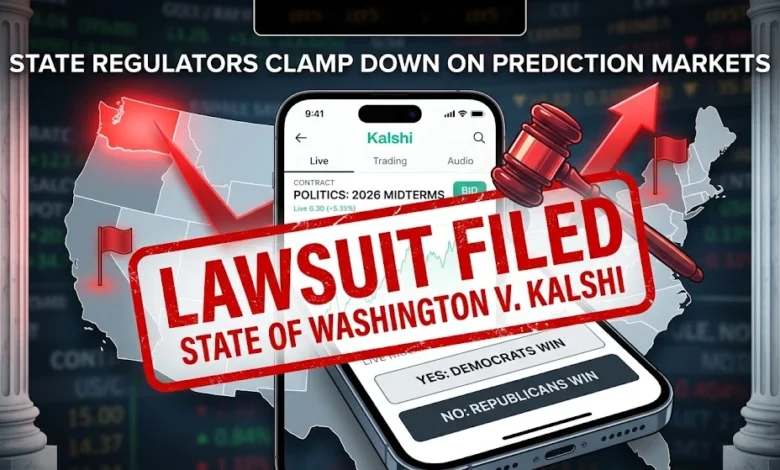
- Washington has filed a lawsuit against prediction market platform Kalshi.
- The legal action is part of a broader, coordinated increase in state-level scrutiny targeting event contract trading.
- The filing highlights ongoing jurisdictional tension over the regulation of prediction markets.
Washington Sues Kalshi as State-Level Regulatory Scrutiny Increases
Washington authorities have initiated legal action against Kalshi, a financial exchange that allows users to trade contracts based on the outcomes of future events. The lawsuit, reported on March 28, 2026, signals an escalation in regulatory intervention regarding event-based trading platforms.
Kalshi, which operates as an exchange under the oversight of the federal Commodity Futures Trading Commission (CFTC), offers markets on economic data, political outcomes, and other real-world events. The new legal action from Washington indicates that federal registration does not preclude state-level regulatory enforcement.
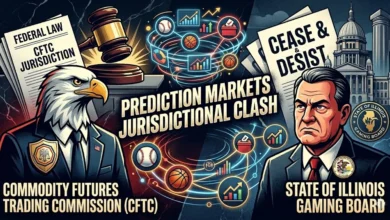
The lawsuit reflects a wider regulatory shift. Multiple state authorities are currently increasing legal pressure against prediction markets. This coordinated scrutiny raises direct questions about state versus federal jurisdictional authority over financial derivatives and event contracts.
Further details regarding the specific statutory violations alleged by Washington are not yet available. Regulatory agencies and legal representatives for Kalshi have not issued additional formal guidance regarding the scope of the legal filing.
Detailed Lawsuit Mechanics
- The Filer and Venue: The civil lawsuit was filed on Friday, March 27, 2026, by Washington Attorney General Nick Brown in King County Superior Court.
- The Core Allegations: Washington alleges Kalshi is in direct violation of the state’s Gambling Act and Consumer Protection Act. The state argues that despite the “prediction market” label, the mechanics risking money on uncertain future events (sports, elections, geopolitical outcomes) for a payout strictly constitute unlicensed online gambling, which Washington banned in 2006.
- Marketing Scrutiny: A significant portion of the AG’s complaint focuses on consumer protection, specifically alleging that Kalshi actively targeted college-age adults (18-21) using student influencers, and in one instance, allegedly attempted to recruit a 15-year-old influencer. The state also cited a Kalshi ad where users texted about finding a way to bet on the NFL “even though we live in Washington” as evidence of knowing circumvention of state law.
Kalshi’s Defense and Counter-Maneuver
- Federal Preemption Argument: Kalshi’s foundational defense is that it operates as a Designated Contract Market (DCM) under the exclusive jurisdiction of the federal Commodity Futures Trading Commission (CFTC). They argue federal commodities law preempts state gambling statutes.
- Immediate Legal Action: Following the Washington filing, Kalshi immediately filed to move the case to federal court, noting they are already litigating similar jurisdictional issues in other federal venues.
- Denial of “War Markets”: Kalshi’s communications team publicly pushed back on AG Brown’s claim that they offer betting on “wars,” clarifying that the specific contract in question was strictly regarding the timeline of Iran’s former Supreme Leader leaving office.
The Macro Regulatory Landscape (A Coordinated Pile-On)
Washington is not acting in isolation. Kalshi is currently facing legal actions from over 20 jurisdictions, signaling a coordinated state-level crackdown:
- Arizona: Earlier in March, Arizona escalated the issue by filing criminal charges against Kalshi for operating an unlicensed gambling business.
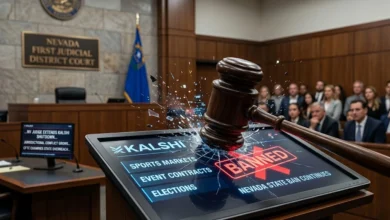
- Nevada: A state judge recently sided with the Nevada Gaming Control Board, issuing a temporary restraining order that blocked Kalshi from operating in the state for 14 days.
- Federal Legislation: The tension has reached Capitol Hill. A bipartisan bill dubbed the “Prediction Markets Are Gambling Act” was recently introduced by Senators Adam Schiff and John Curtis, aimed at amending the Commodity Exchange Act to ban event contracts tied to sports and casino-style games.
The Institutional Irony
In a stark contrast to the state-level legal pressure, Kalshi was approved for margin trading on the exact same day Washington filed its lawsuit. Through an affiliate, Kalshi secured a futures commission merchant license, allowing institutional users and hedge funds to open positions without posting full capital a move signaling that Wall Street infrastructure is still building into prediction markets despite the legal friction.
The content provided in this article is for informational and educational purposes only. It is not intended to be, and should not be construed as, financial, investment, legal, or tax advice.