
Key Takeaways
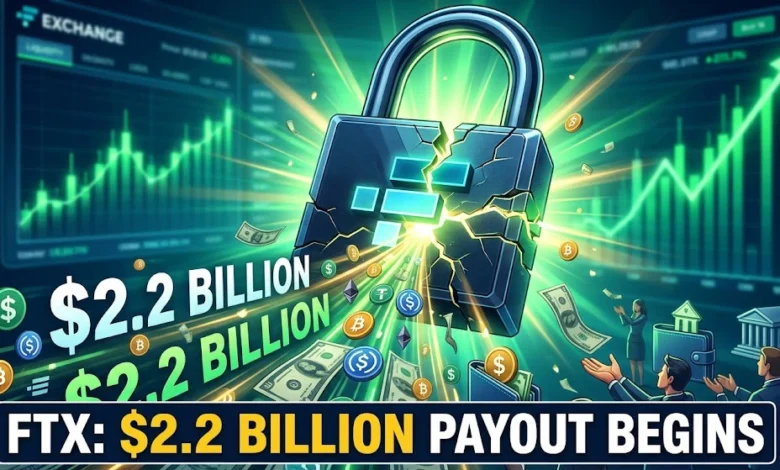
- Liquidity injection: A $2.2 billion distribution is scheduled to commence on March 31, 2026, directly returning capital to approved creditors.
- Reserve release: The FTX estate is slashing its disputed claims reserve from $4.6 billion down to $2.4 billion to fund this specific payout round.
- Compliance pipeline: Funds will route exclusively through authorized service providers for creditors who cleared strict KYC and tax requirements by the February 14 record date.
FTX, the centralized cryptocurrency exchange that collapsed into a historic and highly publicized bankruptcy in November 2022, is preparing to move a massive block of capital. After years of asset recovery and legal untangling, the estate is now executing its next major liquidity event, pushing a wave of cash back into the hands of its former users and institutional clients.
Unlocking the Disputed Claims Reserve
Capital distribution in a bankruptcy of this scale usually moves at a glacial pace. Yet, this upcoming distribution shows the estate aggressively clearing its ledger. To fund this round, FTX filed an amended notice to reduce its disputed claims reserve “from $4.6 billion to $2.4 billion.”
Subject to final court approval, this accounting maneuver specifically frees up $2.2 billion. This cash is earmarked for holders of allowed claims across both Convenience and Non-Convenience Classes, ensuring that both smaller retail users and larger institutional creditors see capital returned. The distribution itself is set to begin on March 31, 2026.
The Institutional Pipeline
Moving billions of dollars requires hardened infrastructure and strict regulatory compliance. The estate is bypassing traditional checks and routing the capital directly through established digital asset distribution service providers: BitGo, Kraken, and Payoneer.
To participate in this $2.2 billion tranche, creditors had to meet a firm February 14, 2026, record date. The mandate left no room for error. Claimants were required to complete Know Your Customer (KYC) verification, submit necessary tax documents, and successfully open an account with one of the approved providers. For those holding transferred claims, the required 21-day notice period had to lapse without objection to hit that February cutoff.
The Valuation Reality
While the sheer volume of this capital release is notable, the mechanics of the payout dictate its broader market impact. Distributions are being made in fiat or stablecoins, and the payout value remains strictly pegged to the original bankruptcy petition date in November 2022.
Creditors are receiving cash equivalents based on the absolute bottom of the crypto bear market. They are recovering their initial dollar-value principal, but they miss out entirely on the massive asset appreciation that occurred across the digital asset sector between late 2022 and early 2026.
Once the FTX estate pushes these distributions to BitGo, Kraken, or Payoneer, individuals become solely responsible for their funds. The ultimate question for market insiders is where this $2.2 billion flows next.
When tracking billion-dollar capital movements in the digital asset space, historical comparisons are vital. The market’s collective memory immediately points to the Mt. Gox distributions of mid-2024. However, looking at the structural differences between Mt. Gox and FTX reveals a completely different liquidity profile for this upcoming March 31 event.
The Mt. Gox Playbook: Fear vs. Reality
In July 2024, the Mt. Gox estate began distributing roughly $9 billion worth of Bitcoin and Bitcoin Cash to creditors who had waited a decade. The prevailing market sentiment was deeply bearish, anticipating a massive, coordinated dump of assets by early adopters looking to cash in on a 10,000% gain.
The actual market impact was far more nuanced. While Bitcoin prices suffered a localized dip in the weeks preceding the distribution as algorithmic traders front-ran the news, the apocalyptic sell-off never materialized. Large institutional buyers, fueled by ETF inflows, absorbed the initial shock. Furthermore, a significant percentage of Mt. Gox creditors chose to hold their returned Bitcoin rather than liquidate it. The immediate volatility was driven more by psychological anticipation than actual order-book dumping.
The FTX Inverse: A Liquidity Vacuum
The critical difference with the upcoming FTX distribution is the underlying asset. Mt. Gox creditors received crypto, creating potential sell pressure. FTX creditors are receiving fiat and stablecoins pegged to the suppressed market valuations of November 2022.
Instead of adding token supply to the open market, this $2.2 billion event acts as a sudden injection of dry powder. The market dynamics shift from managing sell-side absorption to anticipating buy-side velocity.
For the past three years, this capital has been trapped in a legal vacuum. Once it hits accounts at BitGo, Kraken, and Payoneer, we will see a bifurcation in capital flow based on creditor class.
Where the Money Flows Next
The retail cohort, receiving cash equivalents after years of waiting, faces a psychological hurdle. Getting back $20,000 based on a 2022 portfolio that would be worth $80,000 today often triggers “revenge trading” a rapid redeployment of capital into higher-risk altcoins in an attempt to recapture lost opportunity cost. This could create localized, short-term spikes in mid-cap tokens heavily traded on Kraken.
However, the real market movers are the distressed debt funds. Throughout 2023 and 2024, institutional buyers aggressively accumulated FTX claims for as low as 10 to 30 cents on the dollar. For these funds, the March 31 distribution is the realization of a massive, multi-year arbitrage trade.
These institutional actors are less likely to FOMO into retail token narratives. They will either sweep this capital completely out of the digital asset ecosystem to return yield to their limited partners, or they will deploy it into deep-liquidity assets like Bitcoin and Ethereum to establish long-term spot positions.
The immediate market impact on March 31 will not be a crash. Instead, expect a sudden, quiet tightening of stablecoin liquidity, followed by strategic, high-volume block purchases in the days following the distribution.